

If you're looking for rehab for seniors after surgery, knowing what to expect can make the transition from hospital to home easier. The right environment one with skilled care, compassionate staff and structured therapy, can meaningfully speed healing and reduce the risk of a return hospital stay.
That decision can feel overwhelming. Questions come quickly: What does short-term rehabilitation actually look like? How long will my loved one need to stay? Does Medicare help cover the cost?
This guide is here to walk you through those answers clearly and honestly. You'll find what to expect from therapy services and how long short-term rehab typically lasts.
What Does Short-Term Rehab for Seniors After Surgery Actually Look Like?
Short-term rehabilitation provides a structured setting for older adults recovering from surgery, illness or injury before returning home. At Kingswood, rehabilitation combines 24/7 registered and licensed nursing services with physician oversight, coordinated clinical support and on-site physical, occupational and speech therapy.
Care plans are personalized to support each resident’s individual needs and goals, their medical history, current abilities and recovery goals. The center focuses on renovation to improve mobility and help residents regain independence in everyday tasks.
Who May Need Short-Term Rehabilitation After Surgery or Illness?
Several common procedures often call for this level of care:
- Joint replacement surgery, including hip and knee procedures
- Recovery after other major surgeries or illnesses
- Fractures and injuries that affect mobility
- Neurological conditions that affect movement, communication or swallowing
- Situations where an older adult needs additional therapy and nursing care before returning home
How is Short-Term Rehab Different From Home Health Care?
Short-term rehabilitation provides a higher level of on-site clinical and therapeutic services than many people receive through home health care. Instead of receiving services in their own home, residents stay in a rehabilitation setting with 24/7 registered and licensed nursing care, physician and nurse practitioner oversight and on-site physical, occupational and speech therapy.
For someone who needs additional help with mobility, personal care, medications or recovery after surgery, having these services in one setting can provide a more structured transition between hospitalization and returning home.
How Long Does Short-term Rehab Usually Last?
The length of a short-term rehabilitation stay varies from person to person. Recovery depends on factors such as the type of surgery or illness, current mobility, medical needs and progress toward individual goals. The rehabilitation team can help determine when a resident is ready to transition home.
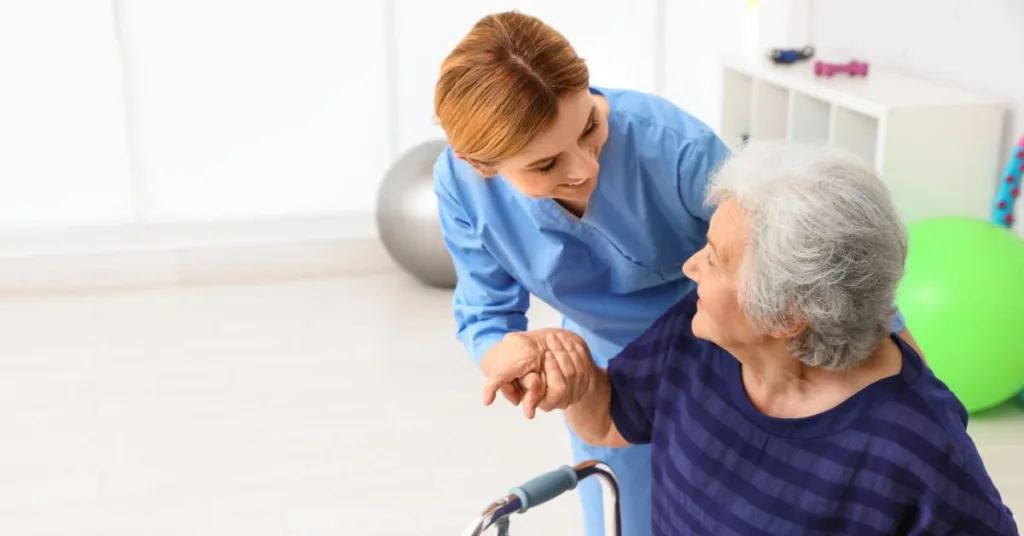
What Types of Therapy and Services Will My Loved One Receive?
Each person's recovery looks a little different. Therapy programs are built around surgery type, individual goals and current functional abilities so your loved one receives care that's tailored specifically to where they are in their healing process.
What Does Physical Therapy Involve?
Physical therapy focuses on rebuilding the strength, mobility and balance that surgery can temporarily take away. Sessions are paced carefully for older adults, with close attention to pain levels and fatigue throughout.
A typical physical therapy program may include:
- Progressive strength exercises for both the upper and lower body
- Functional movements like getting in and out of bed, climbing stairs and improving range of motion
- Balance work, stretching and endurance training, sometimes using equipment like cycle ergometers (Esquiroz Lizaur et al., 2024).
- Fall-prevention strategies are woven throughout each session
Therapists also take time to coach family members on how to support exercises at home, which helps carry progress forward well beyond discharge.
How Does Occupational Therapy Help With Daily Tasks?
Occupational therapy is about getting back to the everyday moments that matter, dressing, eating, grooming and managing the routines that make up independent life. Therapists work on fine motor skills needed for tasks.
Cognitive recovery is part of this work, too. Task management, memory and attention all receive focused attention during sessions. Occupational therapists also assess the home environment, recommending practical adjustments, grab bars, furniture placement and modifications before your loved one returns.
When is Speech Therapy Needed After Surgery?
Speech therapy becomes part of the picture when surgery or illness has affected swallowing or communication. Stroke patients frequently need this support, as do those with neurological conditions. Therapists strengthen the muscles of the mouth and throat to support eating and prevent choking.
Beyond the physical, speech therapy also addresses cognitive function, sharpening memory, improving problem-solving and building attention span.
What Medical Care is Provided During the Stay?
Kingswood provides 24/7 registered and licensed nursing services along with visits and medical supervision from rounding physicians and nurse practitioners. Residents can also receive medication administration and oversight, hydration and nutrition monitoring and coordinated clinical care.
This medical oversight works alongside therapy to address recovery goals and clinical needs as part of the same personalized care plan.
Your Next Step Starts Here
Recovery after surgery can involve more than healing from the procedure itself. Older adults may need to rebuild strength, regain mobility, manage medications and become comfortable with everyday tasks before returning home.
As a rental continuum-of-care community, Kingswood’s Short-Term Rehabilitation program brings these pieces together with 24/7 registered and licensed nursing services, physician and nurse practitioner oversight and on-site physical, occupational and speech therapy. Each resident receives a personalized, goal-driven care plan focused on measurable progress and a comfortable return home.
If you're exploring rehab for seniors after surgery in Kansas City, call Kingswood at 816-290-6368 to learn more about short-term rehabilitation or schedule a visit.
FAQs
Q1. How long does a senior typically stay in short-term rehabilitation after surgery?
Recovery time depends on the type of surgery and individual health factors. Most short-term rehabilitation stays range from two to four weeks, though some seniors may need only a few days while others recovering from complex procedures might require several months. The healing process naturally slows with age, which is why many older adults benefit from specialized rehabilitation support.
Q2. What does a typical day look like during rehabilitation?
A typical day may include nursing care, medication administration, therapy sessions and assistance with daily tasks based on each resident's care plan. Kingswood's rehabilitation team works toward individualized goals involving strength, mobility, communication, swallowing and independence. Hydration and nutrition are also monitored as part of clinical care.
Q3. What types of therapy will my loved one receive during rehab?
Kingswood provides physical, occupational and speech therapy based on each resident's recovery needs. Physical therapy can focus on strength, mobility and balance, occupational therapy helps residents regain independence with everyday tasks and speech therapy can address communication, swallowing and cognitive functioning when appropriate. These services are coordinated with 24/7 nursing care and medical oversight.